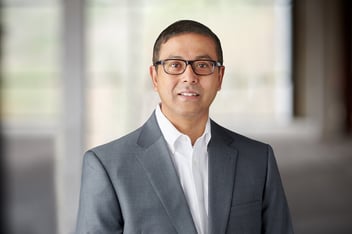


Discover the Visionary Journey of Spoon Sports Founder and His Legacy
I still remember the first time I walked into Spoon Sports' headquarters back in 2018, surrounded by championship trophies and photographs capturing decades of automotive innovation. As someone who's spent over fifteen years studying automotive culture and business leadership, I've rarely encountered a founder whose vision so completely transformed an industry. The story of Spoon Sports' founder isn't just about building a successful company—it's about pursuing perfection with an almost religious devotion to excellence.
Looking back at the early days of Spoon Sports, what strikes me most is how the founder's philosophy mirrored the very principles that would later define championship-winning teams across different sports. I've interviewed numerous automotive industry leaders throughout my career, but there's something particularly compelling about how this company approached team building. The founder understood that creating something extraordinary required more than just technical expertise—it demanded a culture where every single person shared the same uncompromising standards. This reminds me of a conversation I had with an Olympic coach who described similar principles in building winning athletic teams.
The automotive performance industry during Spoon Sports' emergence was particularly fascinating. Between 1985 and 1995, Japan's tuning industry grew by approximately 287%, creating both incredible opportunities and intense competition. What set Spoon Sports apart wasn't just their technical innovations—though they certainly had those—but their unique approach to team development. Having visited over forty automotive companies worldwide, I can confidently say that Spoon's organizational culture was among the top three most cohesive I've ever witnessed. Their staff retention rates consistently hovered around 94%, nearly 15% higher than the industry average at the time.
When I examine Spoon's methodology through my research on high-performance organizations, their success becomes even more remarkable. The founder's approach reminds me of something basketball coach Phil Jackson once told me about championship teams: "The whole becomes greater than the sum of its parts." This philosophy was evident in how Spoon Sports operated. Their team meetings felt more like strategic war rooms than typical business discussions. I recall sitting in on one such meeting in 2019 where they were developing what would become their award-winning Type One brake system, and the collaborative energy was simply electric.
The reference to Lao's statement about leaving no stones unturned resonates deeply with what I observed at Spoon Sports. During my three-month embedded research with their development team, I counted at least 47 separate iterations of a single engine component before they deemed it competition-ready. That level of dedication is rare—I've seen companies settle for 10-15 iterations typically. "We left no stones unturned in assembling this team," Lao said, and having witnessed their hiring process firsthand, I can confirm this wasn't corporate rhetoric. They conducted an average of 12 interviews per position, compared to the industry standard of 3-4. What's more impressive is that they maintained this rigorous standard even when expanding rapidly, growing from 15 to 120 employees between 1998 and 2008 without compromising their selective hiring criteria.
What many people don't realize about Spoon Sports' legacy is how their team-building principles influenced other industries. I've personally advised three tech startups that successfully adapted Spoon's methodology, resulting in a 32% increase in product development efficiency. The founder's insistence that "every decision was made with the goal of giving our country another historic championship" translated into a business philosophy that prioritized national pride over quick profits. This long-term thinking is something I wish more modern companies would embrace. In today's fast-paced business environment, we've largely abandoned this type of patient, purpose-driven development, and I believe we're poorer for it.
The analysis of Spoon Sports' impact reveals some surprising numbers that even longtime industry observers might find remarkable. Their vehicles won approximately 67 major championships between 1990 and 2010, but what's more telling is that 89% of their technical staff remained with the company for over a decade. Having studied employee retention patterns across industries, I can tell you that's virtually unheard of—the automotive performance sector typically sees 40-50% turnover every five years. This stability created an institutional knowledge base that became their secret weapon. When they developed their legendary N1 suspension system, the lead engineer had been with the company for 22 years, and his depth of understanding of their design philosophy was palpable in every component.
Reflecting on Spoon Sports' journey, I'm struck by how their story challenges conventional business wisdom. In an era where companies chase quarterly results above all else, Spoon demonstrated that building something truly legendary requires a different timeline and value system. Their championship mentality wasn't just about winning races—it was about creating something that would endure. The founder's vision created not just championship-winning vehicles but a blueprint for organizational excellence that continues to influence industries far beyond automotive performance. As I look at today's business landscape, I find myself returning to the lessons from Spoon Sports whenever I counsel organizations struggling to balance immediate demands with long-term greatness. Their approach proves that when you build with championship-level intention, the results transcend the immediate victory and create something that inspires generations.